
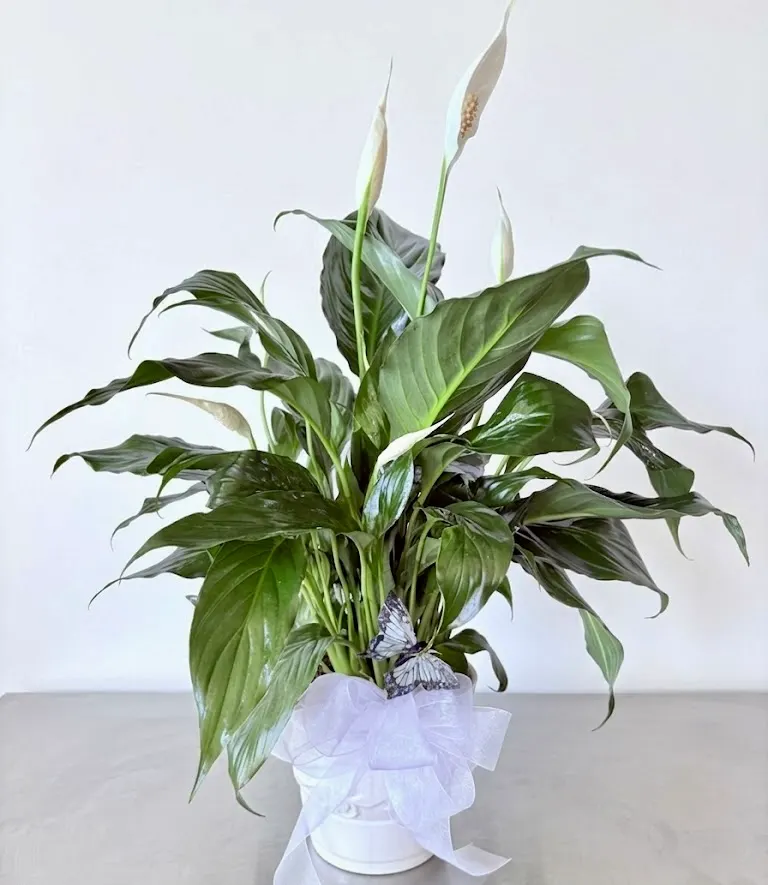
The Peace Lilly (Spathiphyllum) Masterclass: Expert Care & Benefits

The Peace Lilly—scientifically known as the Spathiphyllum—is more than just a staple of indoor decor; it is a botanical powerhouse. Whether you are looking for the perfect sympathy gift or a natural way to purify your home's air, the Peace Lily (often spelled 'Peace Lilly') offers a blend of resilience and elegance that few plants can match.

At Blooms & Things, we believe in providing not just the plant, but the expert knowledge required to help it thrive for decades. This guide explores the deep-rooted science and care secrets of this tropical evergreen.


PEACE LILY GREEN PLANT

PEACE LILY GREEN PLANT


The lush Spathiphyllum plant (Peace Lily plant) in a woven pot cover is one of the few flowering plants that blooms reliably indoors.


$59.99
 
SKU:peacelily
 
*
This product is unavailable.

1. The NASA Science: A Natural Air Bioreactor

The Peace Lilly is a celebrity in the world of environmental science. In the landmark NASA Clean Air Study, it was identified as one of the most effective plants for neutralizing Volatile Organic Compounds (VOCs). Unlike most plants, it can filter all "Big Five" toxins:

  • Formaldehyde: Found in carpets and upholstery.
  • Benzene: Found in plastics and synthetic fibers.
  • Trichloroethylene: Found in household paints and adhesives.
  • Xylene & Ammonia: Common in many household cleaning products.

By transpiring at a high rate, the Peace Lilly also increases room humidity, which can suppress airborne microbes and soothe dry skin during winter months.

2. Expert Care: Simulating the Rainforest Floor

Native to the tropical regions of Central and South America, the Spathiphyllum is a forest-floor survivor. To see yours reach its full 3-foot potential, follow these expert protocols:

The "Dappled Light" Strategy

Direct sunlight is the enemy of the Peace Lilly, causing "phototoxicity" or scorched leaves. They thrive in bright, indirect light. If your plant is lush and green but refuses to bloom, it is likely in a "light desert" and needs to be moved 2-3 feet closer to a window.

Hydration & The "Tap Water Trap"

Peace Lillies are "canaries in the coal mine" for water quality. They are highly sensitive to fluoride and chlorine.
Pro Tip: Use filtered water or allow your tap water to sit in an open container for 24 hours to allow gases to dissipate. This prevents the common "brown tip" syndrome.

The "Resurrection" Ability

The Peace Lilly is famous for being "communicative." When it loses turgor pressure, it will dramatically droop (or "faint"). While it looks dire, this is a survival mechanism. Give it a deep soak, and it will usually return to its upright, turgid state within a few hours.

3. Troubleshooting & Botanical Health

Observation Diagnosis Expert Solution
Yellowing Leaves Nitrogen deficiency or overwatering Allow soil to dry out; apply a balanced fertilizer.
Black/Brown Tips Chemical sensitivity or low humidity Use distilled water and mist the leaves weekly.
No White Blooms Lack of phosphorus or light Move to brighter spot; use 10-15-10 fertilizer.
Sticky Residue Pest intrusion (Scale or Mealybugs) Wipe leaves with Neem Oil or 70% Isopropyl alcohol.

A Premier Choice for Sympathy & Memorial Services

The Peace Lilly is our most requested plant for funeral services. Its deep green leaves and white "sails" represent the rebirth of the soul and the tranquility of the spirit. Unlike cut flowers, a Peace Lily is a "living memorial" that the family can take home, serving as a lasting tribute to their loved one for years to come.

Local Expertise: At Blooms & Things, we specialize in timely, professional delivery to local venues including funeral homes and other memorial centers throughout our region. We ensure your Peace Lilly is hand-delivered at its peak luster, often accented with a sympathy ribbon or keepsake angel upon request.

4. Safety and Symbology

In the language of flowers, the Peace Lilly represents peace, purity, and the rebirth of the soul, which is why it remains the premier choice for sympathy and funeral arrangements. It is a living memorial that can last for over a decade with proper care.

Safety Note: As noted by the ASPCA, the Peace Lilly contains calcium oxalate crystals. It can be irritating to cats and dogs if ingested. We recommend displaying your plant on a high mantel or plant stand away from curious pets.